
Enterprising Woman
Uncovering the History of Builder Maud Brodrick
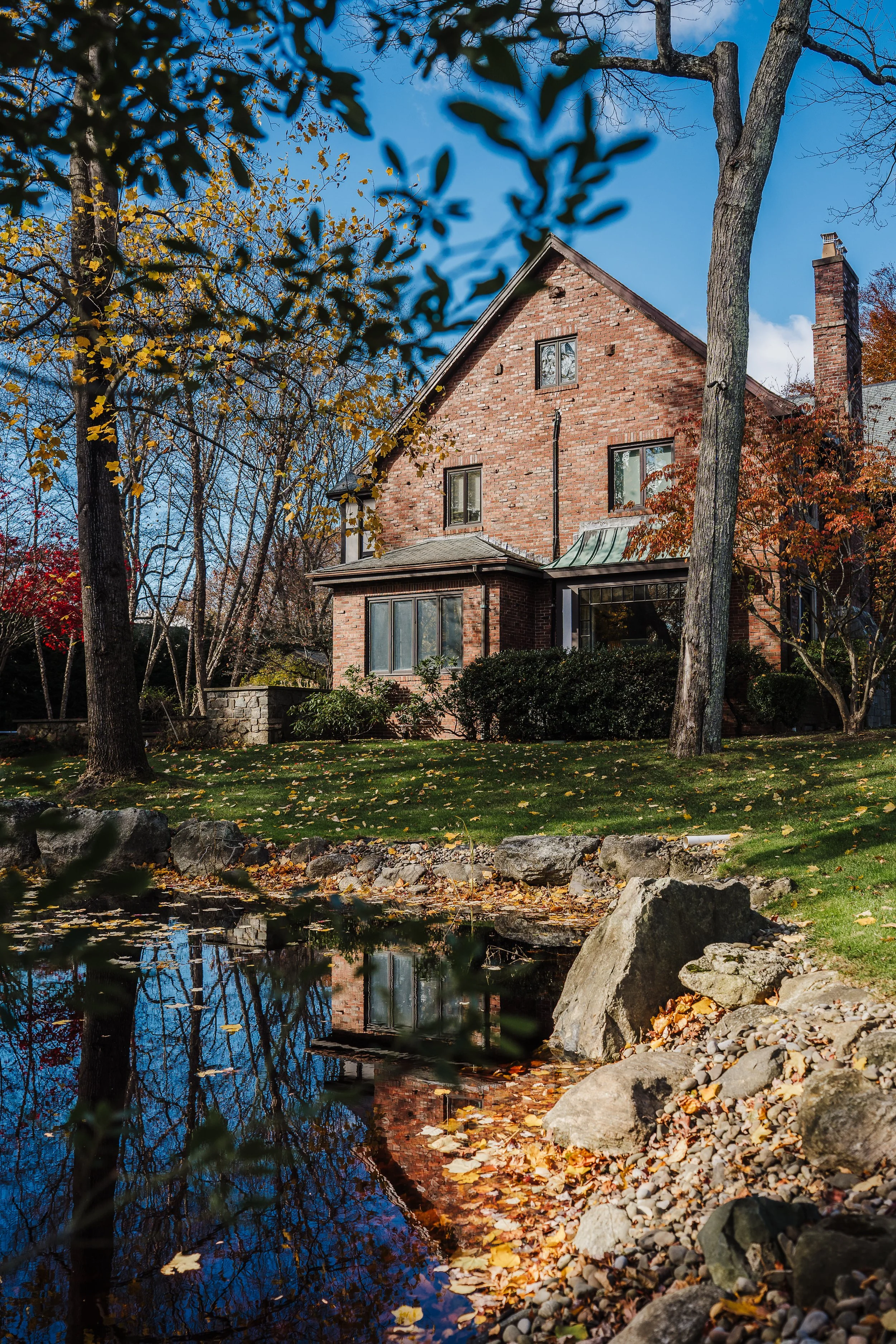
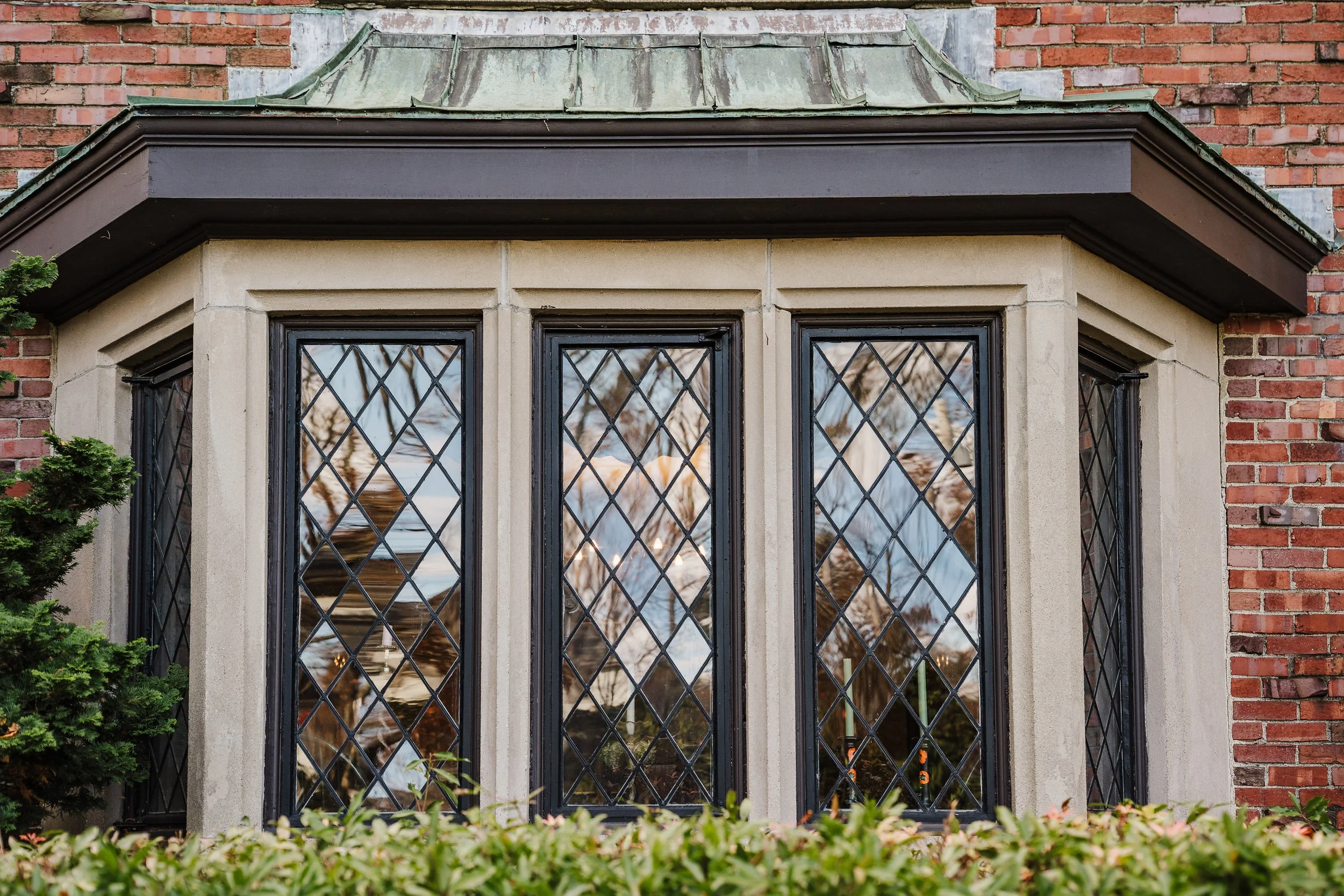
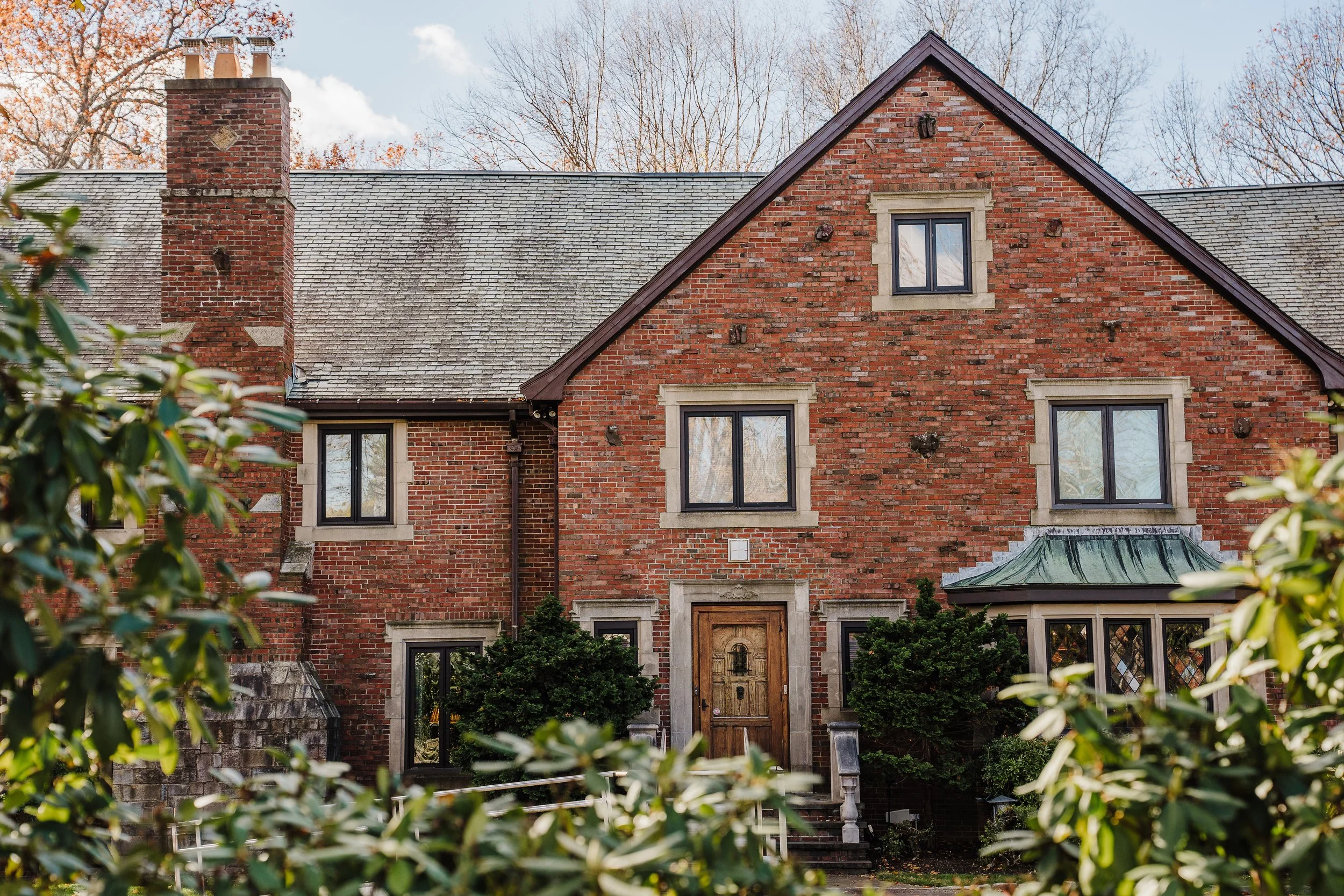
While researching our 1930s Tudor Revival in Wellesley, we were thrilled to discover that the home was designed by a Boston-area female entrepreneur, Maud Brodrick.
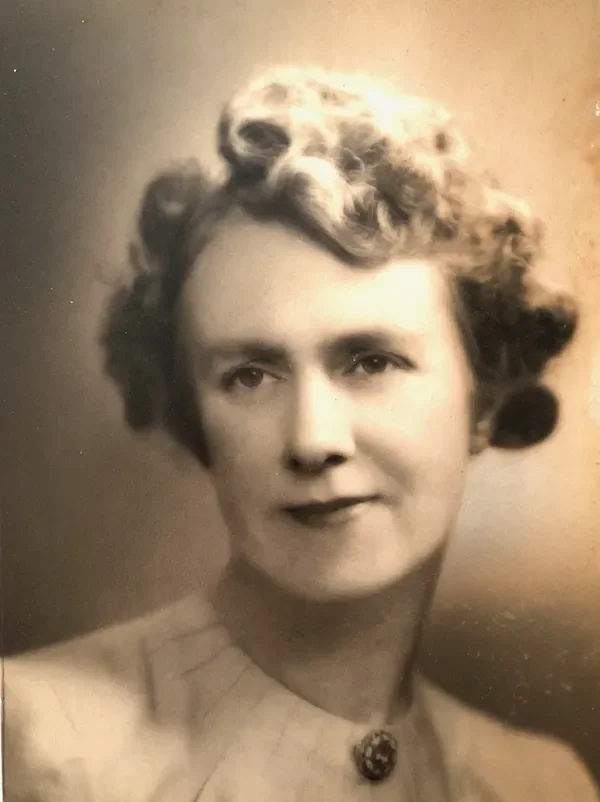
If you haven’t heard of Maud, you’re not alone. The homeowner—an entrepreneur herself—hadn’t either. Maud Brodrick designed and built nearly 200 homes in Newton, Wellesley and other Boston suburbs in the early 20th century.
Born near Manchester, England in 1893, Maud Howard Townley’s formal education ended in the sixth grade. She worked various working-class jobs in a department store, a cotton mill, and a cigarette factory. Along the way, Maud developed a passion for architecture, reading everything she could find on the topic. In 1906, she immigrated to the United States with her parents, eventually settling in West Newton, Massachusetts.
Maud married an Irish immigrant named Walter Brodrick in 1916. Together, they launched Brodrick Bros., a real estate and design-build company. While Walter handled business operations, Maud took charge of the construction division. She utilized practical skills learned from her father alongside her self-taught architectural knowledge. Maud was exceptionally confident in her hands-on capabilities, famously telling the Boston Herald she could handle every aspect of residential construction except pouring the concrete.
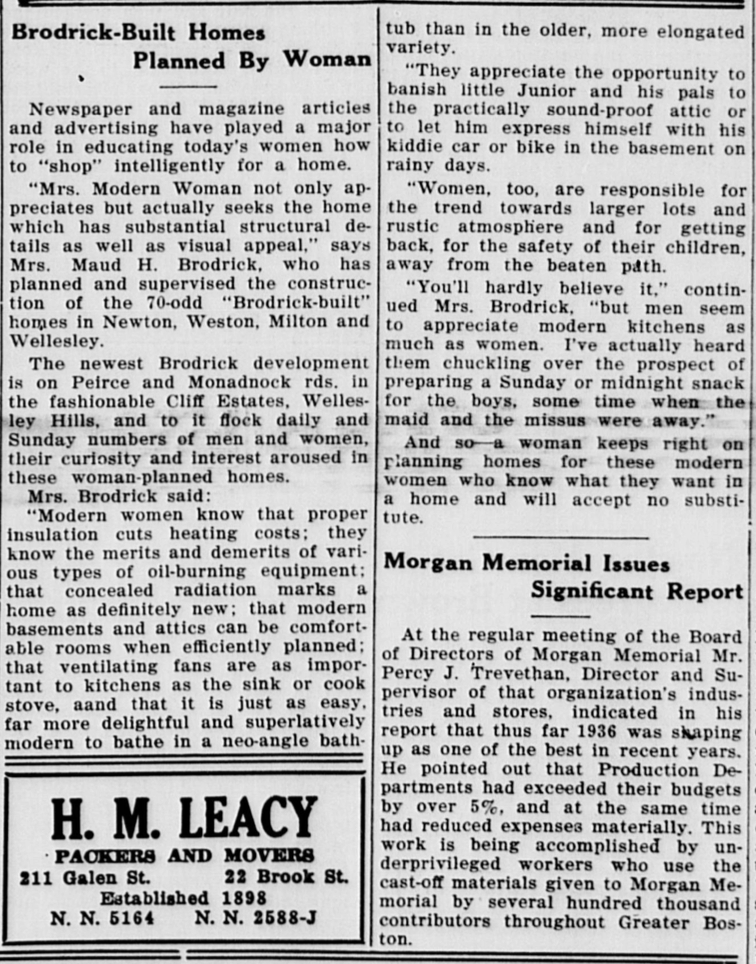
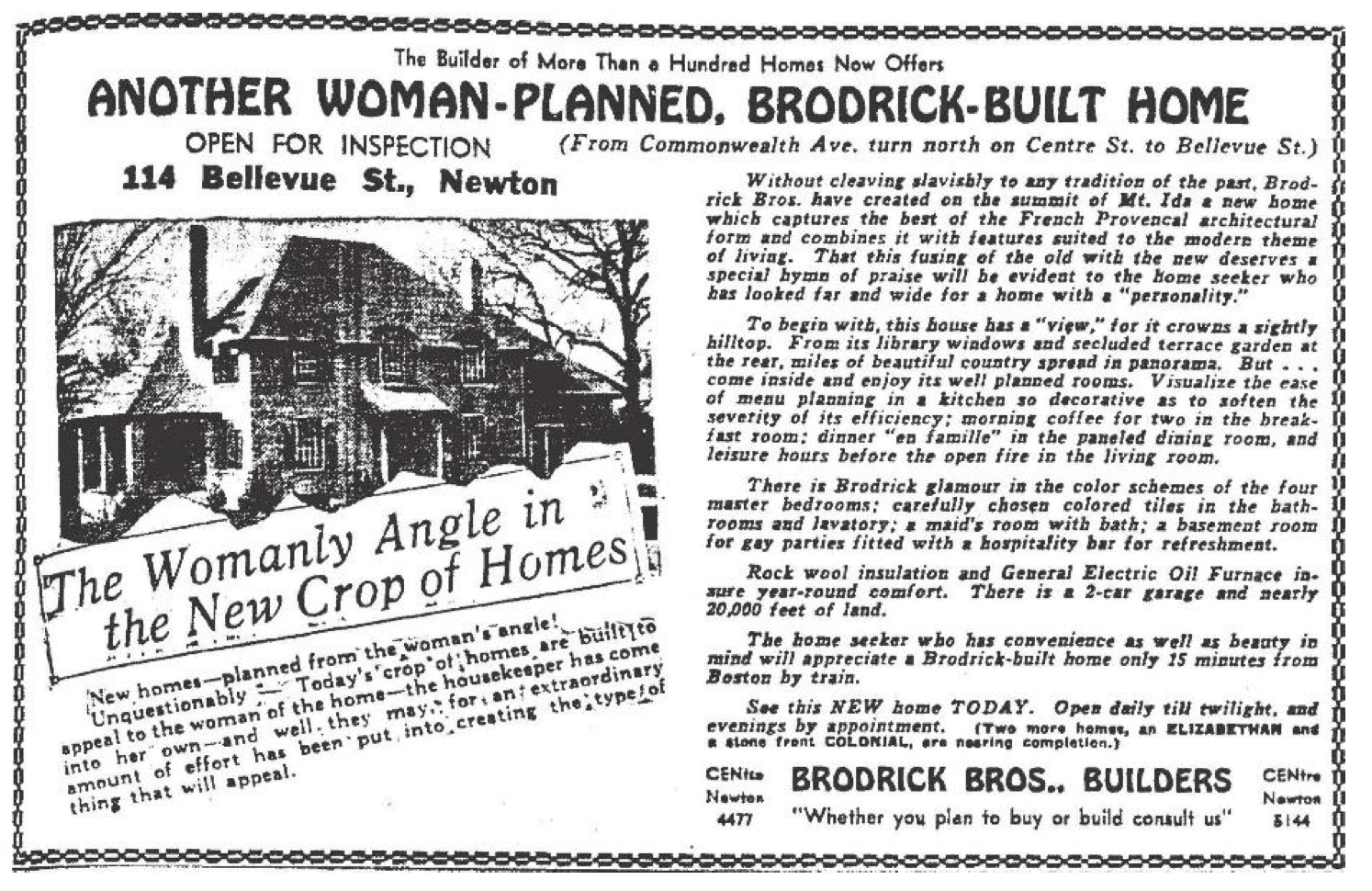
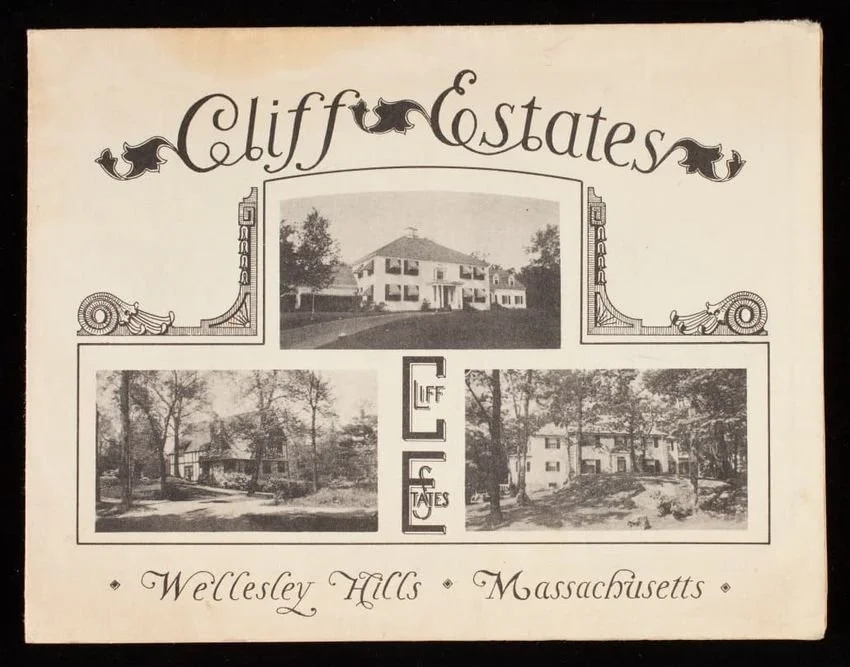
When the Great Depression hit, the Brodricks took a massive gamble, purchasing a large tract of land in Newton for a housing development. This bold move provided vital employment for local laborers during a the economic downturn. To sell the homes, Maud launched a clever marketing campaign centered on the unique advantages of female intuition, focusing on how a woman designer integrates the small, practical details that male builders overlook. The strategy worked, birthing the company’s famous slogan: "Woman-planned, Woman-supervised, Brodrick built." Maud’s creations were elegant brick homes built in Colonial, Tudor, and French Eclectic styles. Her designs targeted affluent buyers, prioritizing upscale conveniences and featuring beakfast nooks and mudrooms, butler pantries and even basement bars.
Alas, relying entirely on the high-end housing market during an economic crisis proved unsustainable. The company's most ambitious project was Pondbrook—a massive estate situated on the Weston border of Wellesley. When the bank foreclosed on this property, it wasa fatal blow to Brodrick Bros. The loss forced Maud and Walter to shut down their operations and file for bankruptcy, bringing an end to an extraordinary chapter in local architectural history.
We love this aspect of Housecraft Books: digging in deeper to the home’s history and learning everything we can about where you live. If you’re curious about your house’s history, reach out—we’d love to uncover it for you!
If you want to dig deeper into Maud’s story, architectural designer Laura Fitzmaurice has done a lot of research: Start here! Also, we love this collection of Pioneering Women in American Architecture. Lots to learn, as always.
